

How Metal Detector Discrimination Really Works
By Mental Metal | Mental Metal Detecting
“Learn when to use discrimination, when to avoid it, and how to recover more valuable targets without digging unnecessary trash.”
New to the Mental Metal Academy?
Welcome to Lesson #1 of the Mental Metal Academy, where we break down metal detector settings into easy-to-understand lessons that help you become a more confident and successful detectorist.
Whether you hunt for old coins, Civil War relics, jewelry, or hidden treasures, understanding your detector is just as important as choosing where to hunt.
Today’s lesson covers one of the most misunderstood settings on any metal detector—Discrimination.
Watch the Full Lesson
What Is Discrimination?
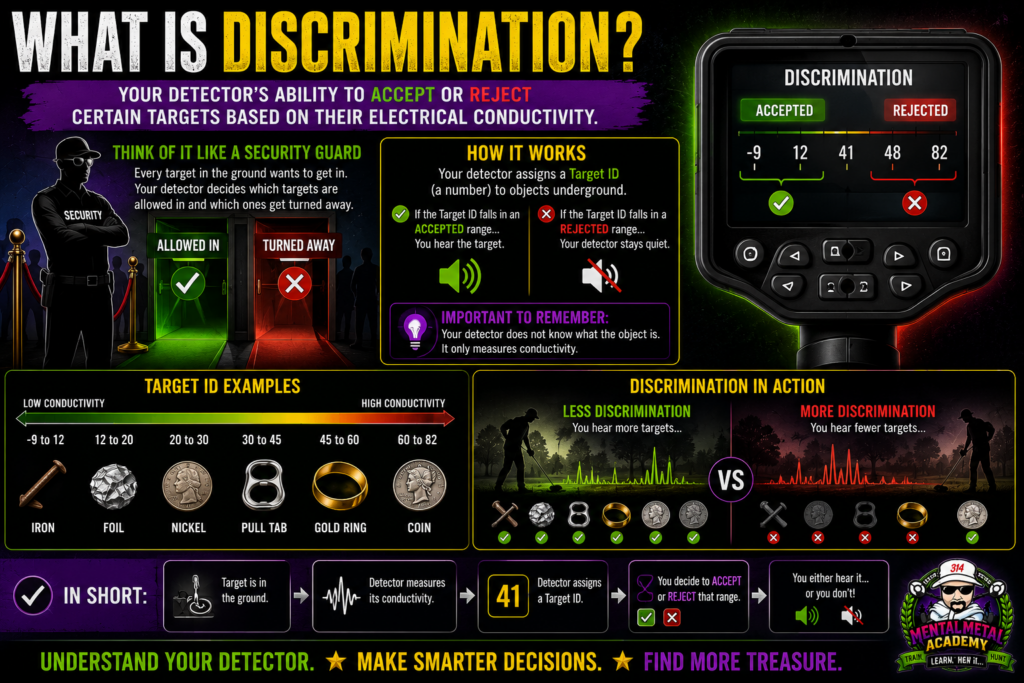
Discrimination is a feature that allows your metal detector to ignore or “discriminate against” certain types of metal based on their electrical conductivity.
Instead of responding to every buried object, the detector can be configured to reject targets you don’t want to dig, such as many iron objects.
Think of discrimination as a filter. It helps reduce unwanted signals so you can spend more time investigating the targets that are most likely to be worthwhile.
Why Is Discrimination Important?
Without discrimination, your detector alerts you to nearly every piece of metal underground, including:
- Rusty nails
- Bottle caps
- Tin cans
- Wire
- Foil
- Modern trash
While digging everything has advantages in certain situations, most hobbyists prefer to reduce unnecessary digging by using discrimination wisely.
The key word is wisely.
The Biggest Mistake Beginners Make
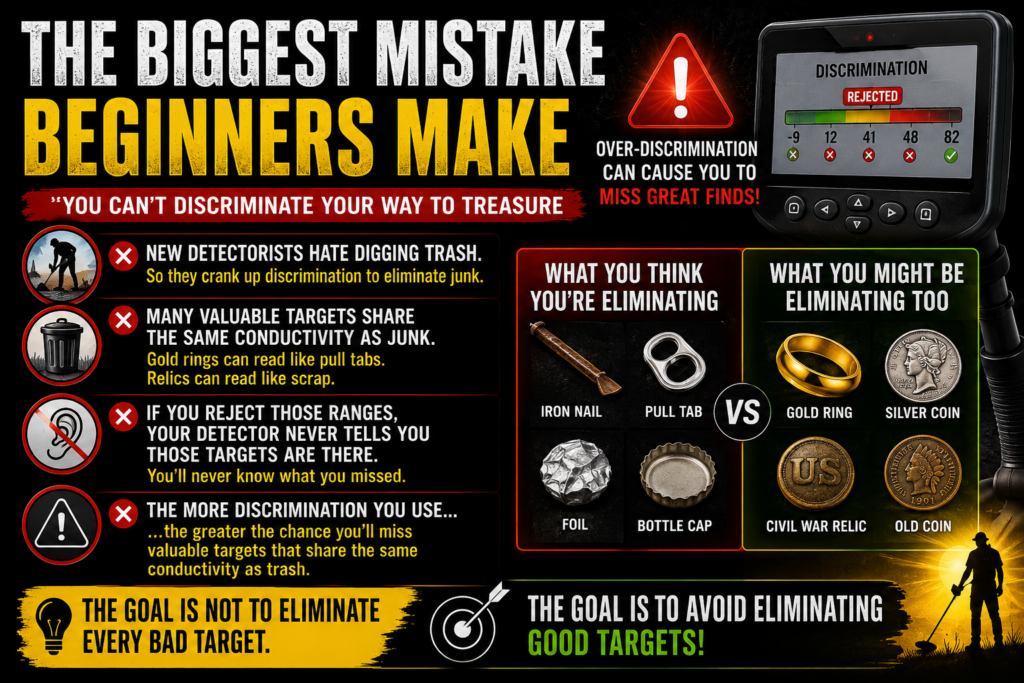
Many new detectorists assume that increasing discrimination always improves their chances of finding valuable targets.
Unfortunately, that’s not true.
Excessive discrimination can also reject desirable items, including:
- Small gold jewelry
- Thin silver jewelry
- Buttons
- Small brass relics
- Certain historic artifacts
One of the fastest ways to miss great finds is by filtering out signals without understanding what you’ve rejected.
When Should You Use More Discrimination?
Higher discrimination works well when hunting:
- Modern parks
- Sports fields
- Schoolyards
- Areas with excessive iron trash
These locations often contain large amounts of modern junk, making discrimination a valuable tool for improving efficiency.
When Should You Use Less Discrimination?
Lower discrimination is often the better choice when searching for:
- Colonial sites
- Civil War camps
- Old home sites
- Farm fields
- Historic properties
Many valuable relics produce signals similar to objects that some detectorists routinely reject.
When history matters, it’s often worth digging more questionable targets.
Mental Metal Tip

Don’t let your detector decide what’s valuable before you do.
Discrimination is designed to help you make better decisions—not make them for you.
Learning when to trust a signal is part of becoming a better detectorist.
Common Beginner Questions
Should I reject all iron?
Not necessarily.
Many experienced relic hunters listen to iron because it helps identify historic occupation areas where valuable artifacts may also be present.
Can discrimination hide good targets?
Yes.
Some desirable targets share conductivity ranges with trash.
Using excessive discrimination increases the chance of missing them.
Does every detector use discrimination?
Almost all modern VLF metal detectors include some form of discrimination, although each manufacturer implements it differently.
What is the best discrimination setting?
There isn’t one universal setting.
The best discrimination level depends on:
- Your detector
- The site
- Your goals
- The amount of trash present
Learning to adjust discrimination for changing conditions is an important skill.
Related Mental Metal Academy Lessons
Continue building your detector knowledge:
- Lesson #2 – Sensitivity
- Lesson #3 – Recovery Speed
- Lesson #4 – Ground Balance
- Lesson #5 – Search Modes
- Lesson #6 – Noise Cancel
- Lesson #7 – Search Coils
Each lesson builds on the previous one to help you understand why your detector behaves the way it does—not just which buttons to press.
Final Thoughts
Discrimination is one of the most useful tools on a modern metal detector, but it’s also one of the easiest settings to misuse.
The goal isn’t to eliminate every unwanted target. The goal is to make informed decisions based on the type of hunting you’re doing.
As you gain experience, you’ll learn that sometimes the best finds come from signals that many detectorists would have ignored.
Watch the Lesson
Enjoyed This Lesson?
If you found this guide helpful:
- Subscribe to the Mental Metal Detecting YouTube channel.
- Join the Mental Metal Academy for a new lesson every Saturday.
- Become a YouTube Alliance Member or Patreon Silver Member (or higher) to access exclusive downloadable Field Cards and support future Academy lessons.
Get Entered into Our Monthly Detector Giveaway

Disclaimer: Mental Metal Detecting is a proud participant in the Amazon Services LLC Associates Program, an affiliate advertising program designed to provide a means for sites to earn advertising fees by advertising and linking to Amazon.com. Mental Metal Detecting also participates in affiliate programs with Bluehost, ShareASale, and other sites. Mental Metal Detecting is compensated for referring traffic and business to these companies.
Recent Posts
What Is Recovery Speed on a Metal Detector? The Complete Beginner's Guide
Part of the Mental Metal Academy Series Welcome to Mental Metal Academy Have you ever swung your metal detector over a patch of ground and wondered why your hunting partner found a coin...
Mental Metal Academy – Lesson #2 The Complete Beginner's Guide By Mental Metal | Mental Metal Detecting "Learn how to properly adjust your metal detector's sensitivity for maximum...